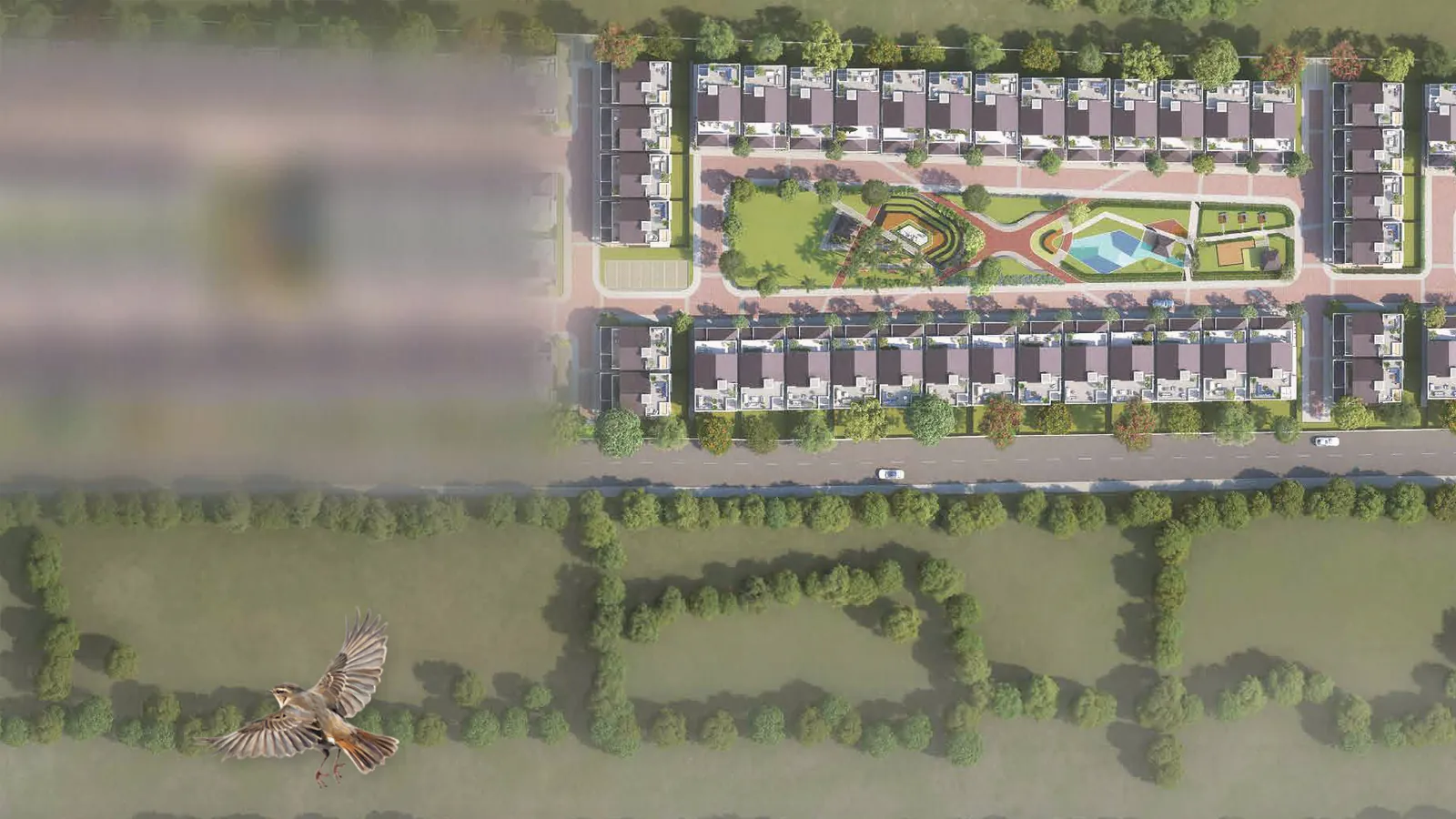
Density is the least glamorous number in a brochure and one of the most important. It tells you how many households share the same entry gate, roads, parks and clubhouse, and therefore how the place will feel at 8 am on a weekday. This guide to low density villa projects in Bangalore explains how to calculate it, what counts as low, and what it changes in daily life. It forms part of our premium villas in Bangalore series.
The simple calculation
Density is homes divided by gross acreage. Ask for both numbers in writing, because brochures often quote "acres of land" that include roads, utilities, open space and reserved areas.
Take the developer's own timeline for NVT Quality Lifestyle: Stopping by the Woods has 124 villas on 14 acres, which is about 8.9 villas per acre by our division. Symphony of Orchards has 161 villas, but the acreage is not in the data we hold, so we cannot compute it. For Whispering Hues, the total acreage and unit count are not part of the facts we can publish; ask the sales team for the figures and the sanctioned layout.
What counts as low?
There is no regulatory definition. As a working rule of thumb, villa projects below about 10 homes per acre feel spacious, while 15 or more feel crowded once roads and clubs are subtracted. That is a judgement, not a standard, so compare projects against each other.
| Measure | Why it matters |
|---|---|
| Homes per gross acre | Overall crowding |
| Plot size | Privacy from neighbours |
| Open space share | Gardens, parks, tree cover |
| Road width | Fire access, parking, calm |
| Clubhouse area per home | Queues for the pool and gym |
What low density changes
Fewer homes per acre means quieter internal roads, lower traffic at the gate, and less wear on shared infrastructure. It also tends to mean more room for tree parks and larger community lawns.
The planned outdoor list at Whispering Hues includes tree parks, a community lawn, a play lawn and a party lawn; whether that feels spacious depends on the final layout. Plot spacing is the second half of the picture: a 32′ wide plot with a rear garden leaves distance between rear windows, a feature we cover in villas with a private garden.
Reading a master plan for density
A master plan shows plots as small rectangles, but the useful clues are elsewhere. Count the number of plots along a single internal road: long, unbroken rows mean more windows facing each other. Look for green buffers between rows, cul-de-sacs rather than straight through-roads, and whether the clubhouse sits near the entrance or deep inside. Compare the master plan you are shown with the layout filed with RERA and the local authority, since marketing drawings sometimes show more open space than the sanctioned plan delivers.
The trade-offs
Low density has a cost. Fewer homes share the fixed costs of security, landscaping and the clubhouse, so monthly maintenance per home can run higher. Land-heavy layouts also tend to be priced higher per sq ft of built-up area. Whether that is worth it depends on how much you value space and quiet.
Density also influences resale. Buyers in the premium segment often pay a premium for open space, which is why luxury villas in Bangalore tend to have fewer homes per acre than mid-market ones. But a project too far from the city or poorly connected can offset any density advantage.
Questions to ask the developer
- Gross acreage and total number of villas
- Percentage of land reserved for open space and amenities
- Internal road width and any one-way systems
- Whether future phases will add homes to the same gate or the same clubhouse
- Whether the sanctioned plan matches the marketing master plan
Phase expansion is the one buyers overlook. A project that launches at low density and adds towers or extra villa blocks later can alter the feel completely. The master plan guide shows how to read a layout.
Density and gated governance
Smaller communities are easier to run: fewer voices, quicker decisions, a stronger sense of familiarity. The flip side is that a small association has a thin resource base. Read our gated community villa guide for the governance questions.
Whispering Hues is at the Expression of Interest stage, and the RERA number and possession date are not yet published; verify on rera.karnataka.gov.in. To see the planned layout, book a site visit or message +91 80509 73051.